Choose an eye serum bottle by matching your formula's viscosity and sensitivity to the dispensing system, confirming precise dose control, and verifying wetted-part material safety and regulatory compliance. These three pillars—formula fit, applicator fit, and compliance and cost fit—give you a clear framework for every option you review.
You can apply the same framework across formats with a partner such as Lisson. A 15ml PETG Eye Cream Bottle Container suits thicker textures, while a 15ml Eye Essential Serum Bottle handles lighter gels. Ask suppliers for a Bottle with Applicator sample, then test each candidate against your own formula before you commit.
Key Takeaways
-
Match your serum's thickness and sensitivity to the right dispensing system for best results.
-
Choose an applicator tip that fits your formula and gives the skin feel you want.
-
Test dose accuracy and air ingress with your real formula before you commit.
-
Check material safety and labeling to meet regulatory standards.
-
Compare total cost, not just unit price, to make a smart investment.
Match Dispensing to Formula
Viscosity describes how thick a liquid is and how readily it flows. Shear sensitivity describes how that flow behavior changes when the product moves through a narrow opening or tip. Oxygen sensitivity describes how quickly a formula degrades when it meets air. You can judge each property with a simple bench test, and each one narrows your dispensing options before you ever compare applicator tips.
Viscosity and Shear Sensitivity
Eye serums usually sit in the gel-like range, and they run lighter than eye creams. That middle ground matters. A thick gel may struggle to enter a dropper pipette, per kr-skincare.com. A watery serum may dispense unevenly through a pump designed for creams. The volume of an individual drop is not fixed across products. Surface tension, viscosity, density, and the geometry of the pipette tip all influence it, according to kr-skincare.com. Test the actual flow behavior at the dispensing tip rather than choosing packaging from a single viscosity number.
Airless pumps have their own operating range. The pump must move the serum through the inlet, valves, and outlet, and the formula must work with the piston or pouch mechanism inside the specific package. A liquid that is too thin for a given design can expose sealing and dispensing problems. A highly viscous or strongly structured serum may demand excessive force or fail to refill the pump chamber properly. Some airless systems target fluid serums, while others are built for more viscous emulsions and creams, kr-skincare.com notes. Boyupackaging.com summarizes the general fit in the table below.
|
Packaging |
Formula fit by viscosity |
|---|---|
|
Airless pump |
Thin-to-medium serums that can prime and travel through the pump |
|
Dropper bottle |
Low-viscosity serums and oils that flow cleanly through a pipette |
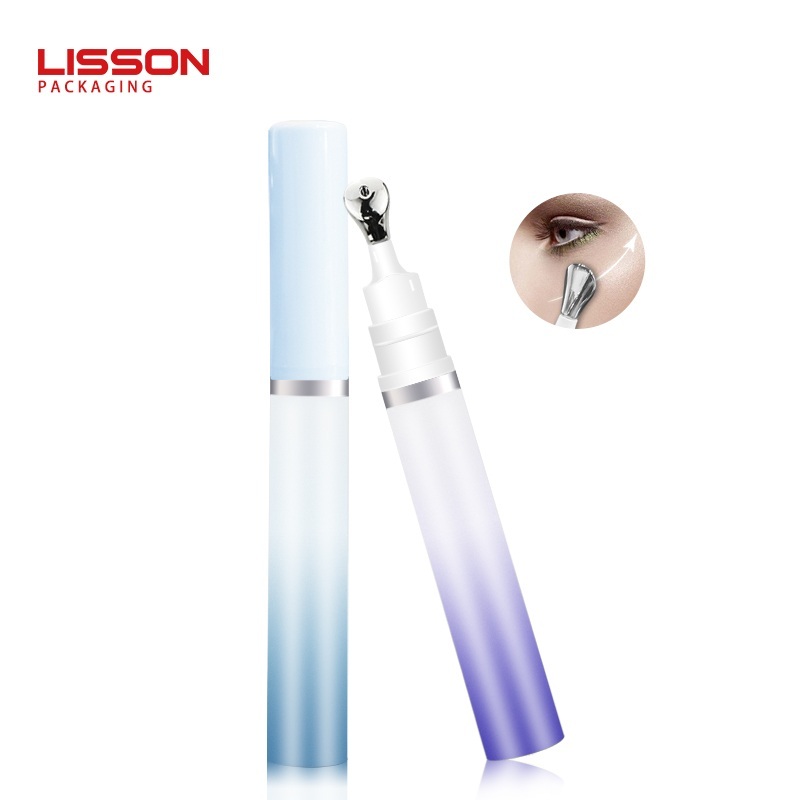
Squeeze tubes occupy a practical middle position. You control the dose by hand pressure, and the tube wall collapses as the product leaves. That behavior suits gel-like serums that resist a pipette but do not need the full mechanical precision of a pump. A 15ml Eye Essential Serum Bottle from Lisson gives you a compact format to test against gel-like serums before you scale up.
Quick answer: an airless pump is usually the stronger starting point for oxygen-sensitive, contamination-sensitive, or medium-viscosity serums. A dropper bottle often suits low-viscosity serums and facial oils when controlled drops, formula visibility, and a familiar premium ritual matter.
Oxygen and Light Sensitivity
Oxygen exposure drives oxidation, and oxidation shows up as color shift, odor change, and lost potency. Light exposure adds energy that can trigger photodegradation, especially in actives with conjugated structures such as vitamin C, retinoids, and polyphenols, according to boldpurity.com. Both risks rise when a formula sits in a clear container with a large headspace.
Barrier performance varies by package type. Boldpurity.com compares the main options in the table below.
|
Packaging Material |
Oxygen Barrier Properties |
|---|---|
|
Airless pump dispensers |
Designed to prevent atmospheric air from entering the container each time the product is dispensed. This reduces headspace oxygen exposure. However, the product inside may still contain dissolved oxygen, and airless systems are only as effective as their seal integrity. |
|
Nitrogen or argon flushing |
Before sealing, the container is filled with an inert gas (nitrogen or argon) rather than air. This replaces oxygen in the headspace, significantly reducing oxidative degradation. Most effective when combined with a barrier closure (cap or pump). |
|
Glass containers |
Glass itself is an excellent oxygen barrier — much better than plastic — depending on thickness and composition. Plastic (PET, HDPE, polycarbonate) is more permeable to oxygen, particularly over extended storage periods. |
Plastic formats still earn their place when you engineer the barrier. EVOH is commonly used as a barrier layer in multi-layer plastic tubes to reduce oxygen transmission and protect sensitive formulas, according to xinflypackaging.com. Five-layer plastic tubes with EVOH barrier layers suit eye cream, treatment cream, serum cream, repair balm, and functional skincare. For brands that want to avoid aluminum-based ABL structures, EVOH tubes balance barrier performance, plastic appearance, decoration flexibility, and modern sustainability positioning, xinflypackaging.com adds.
Light protection follows similar logic. Opaque or dark packaging such as amber glass or opaque plastic significantly reduces light penetration, boldpurity.com reports. Amber glass and opaque plastics typically cut light penetration by 95% or more, which extends shelf life for light-sensitive actives compared with clear packaging. Othilapak.com notes that UV light in the 100–400 nm range is the most damaging, and that UVB (280–315 nm) and UVA (315–400 nm) are particularly problematic. Visible light in the 400–700 nm range, especially the blue and violet end, can still change sensitive formulas. Colored glass blocks or absorbs damaging wavelengths, and that protection extends shelf life and maintains quality, othilapak.com states.
Your dispensing choice and your barrier choice therefore move together. An airless pump paired with an opaque or amber body covers both oxygen and light risk in one package. A dropper bottle works well for low-viscosity oils when you accept the ritual trade-off and protect the formula with dark glass. A squeeze tube with an EVOH layer gives you a plastic-forward option for gel serums that need moderate barrier support. Lisson's Bottle with Applicator range lets you compare these combinations on the same filling line, and the 15ml PETG Eye Cream Bottle Container serves as a reference point for thicker textures during compatibility trials.
Compare Bottle with Applicator Types
Applicator tips change how a serum feels, how much you dispense, and how cleanly the package performs over repeated use. Each tip type earns its place with a different formula and a different user ritual. Compare them on precision, cooling effect, and residue management before you lock a Bottle with Applicator into your line.
Rollerball, Ceramic, Metal, and Silicone Tips
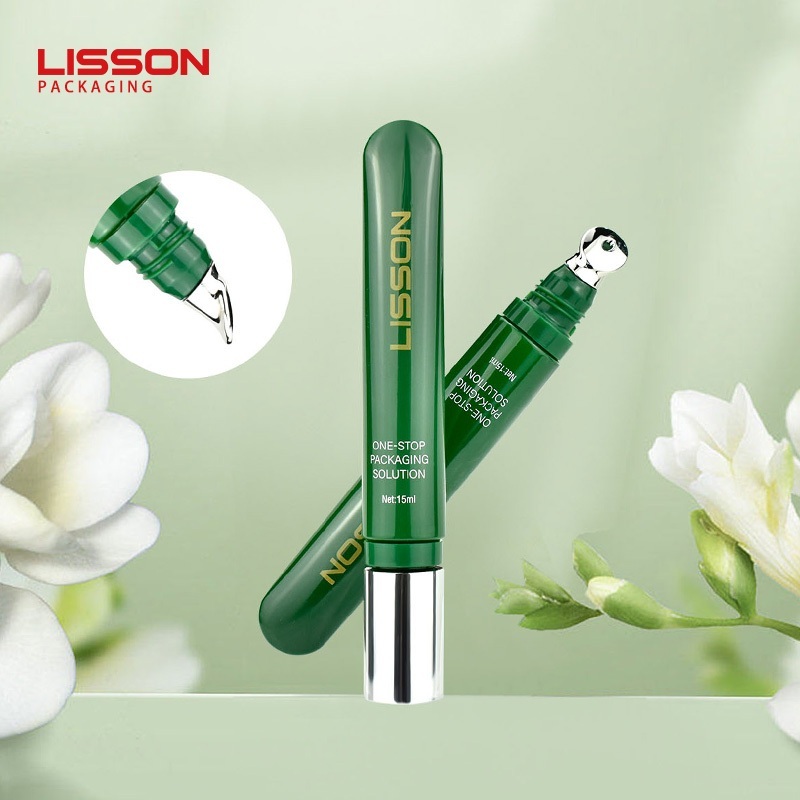
Rollerball tips suit low-viscosity serums and oils. The ball must roll smoothly and dispense evenly without clogging, according to xinflypackaging.com. Ceramic tips offer a smooth, non-reactive surface that resists wear and holds a consistent feel across many uses. Metal tips deliver the strongest instant cooling, because metal transfers heat away from the skin faster than most plastics, xinflypackaging.com reports. Silicone tips give a soft, gentle touch that works well for sensitive under-eye skin and simple application. Spatula applicators fit thicker gels and creams, where you want a flat surface to spread product rather than a rolling ball.
Compact refillable rollerball formats made from acrylic and PMMA give you a portable option for travel sizes and sampling. Lisson can supply these formats alongside your main Bottle with Applicator program.
Precision, Cooling, and Residue
Precision depends on the outlet and the flow channel. Small outlets and precision nozzles help control the amount of serum dispensed, and standard tube outlet references run at approximately 1.5 mm, 3 mm, and 5 mm, according to xinflypackaging.com. A narrow orifice controls fluid or lightweight formulas, while a long nozzle supports targeted under-eye dispensing.
Cooling and skin feel separate metal from plastic clearly. The table below summarizes the trade-offs from xinflypackaging.com.
|
Skin-Feel Factor |
Metal Applicator |
Plastic Tip |
|---|---|---|
|
Instant cooling |
Stronger and more noticeable |
Mild or limited |
|
Massage effect |
Smooth and weighted feel |
Light and gentle feel |
|
Pressure control |
Better for premium massage positioning |
Better for soft, simple application |
|
Comfort around eye area |
Excellent if edges are polished and rounded |
Good if molding is smooth and burr-free |
Residue management decides long-term satisfaction. Formula residue can dry around the outlet and cause clogging, so run a repeated-use test that simulates daily application and checks tip wear, clogging, cap fit, and residue buildup, xinflypackaging.com advises. A metal applicator must be smoothly finished and securely assembled to avoid leakage or discomfort, and you should validate metal parts against your formula rather than assume compatibility. Plastic tips also need accurate molding and smooth flow paths to prevent clogging or messy dispensing.
Assembly discipline ties the whole package together. The bottle, pump, neck finish, closure, torque, and filling process must function as one system, and small dimensional variations can cause leakage or assembly damage, apcpackaging.com notes. Confirm the final fill weight, roller-ball diameter, headspace, and formula density with a technical drawing or approved production sample before bulk production. Use the 15ml PETG Eye Cream Bottle Container as a reference body for thicker textures and the 15ml Eye Essential Serum Bottle for gel serums during these trials.
Verify Bottle with Applicator Performance
Performance testing separates a package that looks right from one that works right. You need three checks on every candidate: dose accuracy, afterflow control, and air ingress prevention. Run each check with your real formula, not a surrogate fluid.
Dose Accuracy and Afterflow
Dose accuracy tells you whether each actuation delivers the volume your label promises. ASTM D4336-18(2025) sets out the standard practice for determining output per stroke of a mechanical pump dispenser by weight, per boyupackaging.com. ASTM D3890-18(2025) covers the number of strokes required to prime a mechanical pump dispenser. Track both numbers across a full simulated use cycle. A pump that primes quickly but drifts in output near the end of life will fail in the field.
Afterflow is the residue that keeps emerging after the user releases pressure. A light gel may seep across an open nozzle after the user lets go, kr-skincare.com notes. The table below summarizes the cause and the control.
|
Observation |
Detail |
|---|---|
|
Afterflow cause |
A light gel may seep across an open nozzle after the user lets go. |
|
Afterflow control |
A valve at the outlet can help control afterflow while retaining a squeeze format. The valve manages flow through the opening, though the amount dispensed still varies with the squeeze. |
|
Outlet flow control need |
If cream continues to emerge before the cap is replaced, the outlet needs better flow control. |
Test afterflow by dispensing a full dose, waiting, and checking the tip for seepage before you replace the cap. Repeat this across the full bottle life. A valve-equipped outlet gives you a practical control point for gel serums in a squeeze format.
Air Ingress and Compatibility
Air ingress shows up as large air pockets, intermittent dosing, or a dose that falls off near end of life. Boyupackaging.com lists the diagnostic path: fill video or section, seal integrity, valve function, and prime count. Inspect the piston and vent, then plot dose by stroke near end of life. A good fresh result that turns poor after aging or cold storage points to rheology shift, resin or seal swelling, lubricant migration, creep, or formula separation. Check aged component dimensions, torque and function, and formula state.
Compatibility testing exposes the real formula to the final pack. Boyupackaging.com recommends repeat prime, dose, leak, piston travel, and evacuation checks after compatibility and stability exposures, then linking appearance and material changes with function. ASTM D6633-18(2025) provides the basic functional stability practice through accelerated usage. Use the 15ml PETG Eye Cream Bottle Container from Lisson as a reference body for thicker textures during these trials. Pair it with the 15ml Eye Essential Serum Bottle when you test gel serums on the same line. Run every candidate Bottle with Applicator through the same protocol so your comparison stays fair.
Confirm Compliance and Cost
Material Safety and Labeling
Start with the wetted parts. Every surface that touches your serum must meet the material safety expectations for its intended use. Ask your supplier for documentation on the resin, the tip material, and any coatings or adhesives in the assembly. Confirm that each wetted component is compatible with your formula and that the supplier can support the labeling your market requires. Testing standards give you a shared reference point. ASTM D6633-18(2025) covers basic functional stability through accelerated usage, and you can cite it in your RFQ to align expectations. Keep the documentation trail complete from sample to bulk order.
Unit Cost and Total Cost of Ownership
Unit cost starts with the applicator. Lisson's cost breakdown shows a standard screw cap tube at $0.02–$0.04, a nozzle tip applicator tube at $0.05–$0.12, and a roller ball applicator tube at $0.15–$0.35. Airless pump tubes run $0.30–$0.80. For a 15–20 ml eye cream tube, Lisson estimates tube material at $0.10, applicator at $0.10–$0.25, and printing at $0.03, for a total of $0.25–$0.45.
|
Applicator Type |
Cost |
Use Case |
|---|---|---|
|
Standard Screw Cap Tube |
$0.02–$0.04 |
general creams, cleansers |
|
Nozzle Tip Applicator Tube |
$0.05–$0.12 |
spot treatments, gels |
|
Roller Ball Applicator Tube |
$0.15–$0.35 |
eye serums, cooling gels |
|
Airless Pump Tube |
$0.30–$0.80 |
high-end skincare, sensitive formulations |
Decoration can represent 10%–30% of total cost, per Lisson. Volume changes the picture: 5,000 units may cost $0.35 per tube, while 50,000 units may reach $0.18. Custom molds run $500–$5,000 as a one-time charge, and advanced testing adds $200–$2,000. Add color matching, samples, artwork revisions, and warehousing to your total cost of ownership. Compare each Bottle with Applicator candidate on this full basis, including the 15ml PETG Eye Cream Bottle Container and the 15ml Eye Essential Serum Bottle, before you finalize.
Weigh five criteria before you commit:
-
Formula-to-dispensing match
-
Applicator fit
-
Dose and air-ingress performance
-
Material safety and labeling
-
Total cost
For your RFQ, request wetted-part documentation, dose and prime data, and a production sample. Lisson, as one example partner, offers the Bottle with Applicator, the 15ml PETG Eye Cream Bottle Container, and the 15ml Eye Essential Serum Bottle.
Test every sample against your own formula before you finalize. Bench trials reveal flow, residue, and compatibility issues that spec sheets cannot.
FAQ
How do I choose between an airless pump and a dropper for my eye serum?
Start with flow behavior at the tip. Airless pumps suit thin-to-medium serums that prime and travel through the pump. Droppers fit low-viscosity serums and oils that flow cleanly through a pipette. Test both with your real formula before you decide.
Which applicator tip works best for sensitive under-eye skin?
Silicone tips give a soft, gentle touch that suits sensitive skin. Metal tips deliver stronger instant cooling and a weighted massage feel. Ceramic tips resist wear and hold a consistent feel. Match the tip to your formula and your user ritual.
How many samples should I test before finalizing a Bottle with Applicator?
Run every candidate through the same protocol: prime count, dose accuracy, afterflow, leak, and air ingress. Test across a full simulated use cycle and after stability exposure. Compare the 15ml Eye Essential Serum Bottle and the 15ml PETG Eye Cream Bottle Container on equal terms.
Is a premium applicator worth the higher unit cost?
Weigh total cost of ownership, not unit price alone. A roller ball applicator tube runs higher than a standard screw cap, yet cooling and massage can justify the premium for eye serums. Factor in decoration, mold charges, and filling efficiency before you commit.
What should I include in an RFQ to Lisson?
Request wetted-part documentation, dose and prime data, and a production sample. Ask for compatibility results with your formula. Lisson supplies the Bottle with Applicator, the 15ml PETG Eye Cream Bottle Container, and the 15ml Eye Essential Serum Bottle for side-by-side trials.